

Composite
Bonding

Sculpting a perfect smile, without the drill
For many patients, the goal is not a complete overhaul, but a refinement. You might be happy with your teeth generally, but dislike a chipped edge, a small gap, or slight unevenness.
Composite Bonding is a minimally invasive cosmetic treatment that allows us to transform your smile in a single visit—often without touching your natural tooth structure at all.
Using a high-aesthetic dental resin, we hand-sculpt new shapes directly onto your teeth. We can lengthen worn edges, close gaps, and restore symmetry, blending the material seamlessly with your natural enamel.
The No Drill Advantage
The most significant benefit of composite bonding is that it is additive. Unlike porcelain veneers or crowns, which often require the removal of some natural tooth surface to create space, bonding works by adding material to what is already there.
-
Zero to Minimal Preparation: In the vast majority of cases, we do not need to drill or file your natural tooth. Your underlying tooth remains healthy and intact.
-
Reversible: Because the underlying tooth is untouched, the procedure is often reversible.
-
Single Visit: There are no impressions sent to a lab and no temporary teeth. You walk in with your current smile and walk out with your new one the same day.
Note: most of the cases we treat with Porcelain veneers are also non-prep

Bonding vs Veneers:
Which Is Right For You?
At The Wraysbury Clinic, we believe in radical transparency. While composite bonding is a fantastic treatment, it is distinct from Porcelain Veneers. It is important to understand the trade-offs so you can choose the option that fits your lifestyle and budget.
1. Cost
Composite Bonding is significantly more cost-effective than porcelain veneers. Because it is done chair-side in a single visit without laboratory fees, the price point is lower, making it an accessible entry point into cosmetic dentistry.
2. Longevity
Porcelain Veneers are incredibly durable and stain-resistant, often lasting 10–15 years or more. Composite Bonding, while strong, is a resin material. It is more porous than porcelain, meaning it can pick up stains (from coffee, red wine, or smoking) over time, and it may chip if subjected to heavy biting forces. Generally, bonding looks its best for 3–5 years before it may need polishing, repair, or replacement.
3. The Finish
Porcelain has a natural "glass-like" vitality that never fades. Composite looks fantastic and highly natural when first placed, but it requires regular maintenance and polishing to keep its shine.
The Artistic
Process
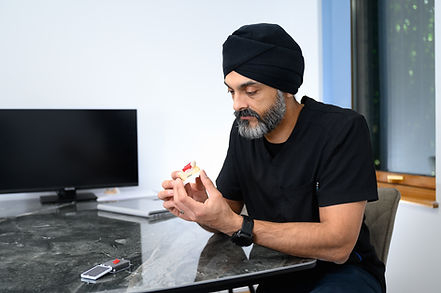
Composite bonding is arguably the most artistic procedure in dentistry. There is no laboratory involved; the result relies entirely on the hand skills and artistic eye of your dentist.
We layer different shades of composite—mimicking the opaque core and the translucent edge of a natural tooth—to ensure your bonding doesn't look like a "white patch," but looks exactly like a real tooth.
Let's Talk
The Wraysbury Clinic
45 Station Road
Wraysbury
Staines
TW19 5ND